




Several natural ingredients show promise for supporting fungal nail recovery, with tea tree oil, oregano oil, and snakeroot extract having the most scientific backing due to their potent antifungal properties. Effective use requires preparing the affected nail and applying the chosen ingredient consistently, often twice daily, over several months. While these botanicals can be part of a management plan, their success varies, and they are generally considered for mild to moderate cases. For more persistent infections, combining them with or moving to clinically-proven technologies is often necessary.
What is Onychomycosis and Why is it So Stubborn?
Before diving into remedies, it is vital to understand the condition. Fungal nail infection, medically known as onychomycosis, is a common condition that begins as a white or yellow spot under the tip of your fingernail or toenail. As the fungal infection goes deeper, it may cause your nail to discolor, thicken, and crumble at the edge. The primary culprits are a group of fungi called dermatophytes, but yeasts and molds can also be responsible.
The stubborn nature of onychomycosis stems from its location. The fungus thrives in the dark, moist environment of the nail bed, protected by the hard keratin of the nail plate itself. This protective barrier makes it incredibly difficult for topical treatments to penetrate effectively and reach the source of the infection. Furthermore, nails grow slowly, meaning any treatment requires months of consistent application to allow a new, healthy nail to grow out and replace the infected portion.
Natural Ingredients with Scientific Backing for Fungal Nail Support
While many home remedies are passed around, only a handful of natural ingredients have been studied for their antifungal properties and their potential effect on onychomycosis. These options are backed by at least some level of scientific inquiry, making them more credible candidates for supporting your nail health.
Tea Tree Oil (Melaleuca alternifolia): The Antifungal Powerhouse
Tea tree oil is perhaps the most well-known natural antifungal agent. Extracted from the leaves of the Australian Melaleuca alternifolia tree, this essential oil contains a number of compounds, most notably terpinen-4-ol, which has been shown in laboratory studies to kill a wide range of fungi and bacteria. Its ability to penetrate the skin and nail bed to a degree makes it a popular choice for topical application.
Some small-scale clinical studies have shown that consistent application of 100% tea tree oil can improve the appearance of fungal nails for some individuals over a period of three to six months. However, it can cause skin irritation in some people, so it is often recommended to dilute it with a carrier oil like coconut or jojoba oil, or to perform a patch test on the skin before applying it to the sensitive area around the nail.
Oregano Oil (Origanum vulgare): A Potent Thymol Source
Oil of oregano, specifically from the Origanum vulgare species, contains a powerful antifungal compound called thymol. Thymol has been extensively researched for its antiseptic and antifungal properties. Laboratory tests confirm its effectiveness against the common dermatophytes that cause nail fungus. Like tea tree oil, its potential lies in its ability to disrupt the fungal cell membrane.
Oregano oil is extremely potent and must be diluted with a carrier oil before application to avoid significant skin irritation or burns. Its strong scent and potency mean that it should be used with care. While promising in vitro, large-scale human trials on nail fungus are limited, but its strong antifungal profile makes it a compelling natural option.
Snakeroot Extract (Ageratina pichinchensis): A Clinically Studied Alternative
Lesser known in mainstream circles, snakeroot extract comes from a plant in the sunflower family. A 2008 study published in the journal Planta Medica showed compelling results. In the study, an antifungal formulation made from Ageratina pichinchensis was applied to infected toenails every third day for the first month, twice a week for the second month, and once a week for the third month. The results were comparable to the prescription antifungal medication ciclopirox, with a success rate of around 71%.
This study provides some of the strongest clinical evidence for a natural ingredient in treating onychomycosis. It suggests that specific compounds within the plant have a direct and effective action against nail fungus. Finding pure snakeroot extract may be more difficult than sourcing tea tree or oregano oil, but its research backing is significant.
Olive Leaf Extract (Olea europaea): Oleuropein’s Protective Role
Olive leaf extract contains an active ingredient called oleuropein, which is celebrated for its antifungal, antimicrobial, and immune-boosting properties. The theory is that oleuropein can help the body fight off the fungal infection from within when taken orally, while topical applications may also have a direct effect. It works by interfering with the fungus’s ability to replicate.
While often taken in capsule form to support overall wellness and immunity, topical creams and salves containing olive leaf extract can be applied directly to the affected nail. This dual-action potential—both internal and external—makes it a unique component in a holistic approach to managing nail fungus.
Popular Home Remedies: Understanding the Anecdotal Evidence
Beyond scientifically scrutinized ingredients, many household items are frequently recommended. It’s important to differentiate between remedies with plausible mechanisms and those with strong clinical proof. Most of these fall into the category of “anecdotal” or “plausible but unproven.”
What About Vinegar Soaks?
Vinegar, particularly apple cider vinegar, is a staple of home remedies. The underlying theory is that vinegar’s acidic nature can alter the pH level of the nail and surrounding skin, creating an environment that is inhospitable to fungal growth. Proponents suggest daily soaks of the affected foot or hand in a solution of one part vinegar to two parts warm water for 15-20 minutes.
Despite its popularity, there is no strong clinical evidence to support vinegar as a standalone cure for onychomycosis. While it may help with superficial athlete’s foot or soften the nail to allow for better trimming, it is unlikely to penetrate the nail plate sufficiently to eradicate a well-established infection.
Can Garlic or Coconut Oil Help?
Garlic contains allicin, a compound with known antifungal properties in lab settings. Some people apply crushed garlic cloves to the affected nail. Similarly, coconut oil contains fatty acids like lauric acid that have demonstrated antifungal activity in test tubes. However, a substance working in a petri dish does not guarantee it will work on a human nail.
There are no clinical trials that validate the use of topical garlic or coconut oil for curing nail fungus. The concentration of active compounds may not be sufficient, and their ability to penetrate the nail is unproven. They are generally harmless but should not be relied upon as a primary treatment.
The Vicks VapoRub Method: An Unconventional Approach
Applying Vicks VapoRub to fungal nails has gained surprising traction. This topical ointment contains camphor, eucalyptus oil, and menthol. Both camphor and eucalyptus oil have demonstrated some antifungal properties in laboratory studies. Users report applying a small amount to the affected nail daily.
One small study showed positive results in some participants, but it was not a controlled clinical trial. The occlusive nature of the petroleum jelly base might help the active ingredients penetrate, but this is an off-label use. While many report cosmetic improvement, it’s not a medically endorsed treatment.
How to Correctly Apply Natural Topical Treatments for Maximum Effect
Simply dabbing an oil on a thick, infected nail is unlikely to yield results. Proper preparation and consistent application are key to giving these natural ingredients the best chance to work.
First, prepare the nail. Once a week, after a bath or shower when the nail is softer, trim the infected nail as short as is comfortable. Using a dedicated file, gently file down the surface of the nail. This thinning of the nail plate helps the topical treatment penetrate more effectively to the nail bed where the fungus resides. Be sure to disinfect your tools after each use.
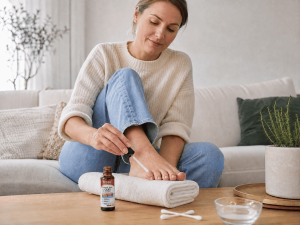
Second, apply the treatment consistently. Most natural remedies, especially essential oils, should be applied twice daily—once in the morning and once at night. Use a cotton swab or a clean dropper to apply a few drops of the oil directly to the nail, the cuticles, and the skin underneath the nail tip. Allow it to soak in for at least 10-15 minutes before putting on socks or shoes.
Finally, embrace patience and persistence. Natural treatments are not a quick fix. It can take six months to a year or more of diligent application to see a completely healthy new nail grow out. Quitting too soon is the most common reason for failure.
| Ingredient | Recommended Application | Frequency | Notes |
|---|---|---|---|
| Tea Tree Oil | Apply 1-2 drops to the nail and surrounding skin. | Twice daily | Dilute with a carrier oil (e.g., coconut oil) if skin irritation occurs. |
| Oregano Oil | Apply 1-2 drops, heavily diluted in a carrier oil. | Twice daily | Very potent; patch test is essential. Do not use undiluted. |
| Snakeroot Extract | Follow product instructions, or apply as per the clinical study protocol. | Variable | Less common but has strong research backing. |
| Vinegar Soak | Soak foot/hand in 1 part vinegar, 2 parts warm water. | Once daily (15-20 min) | More for surface-level support; unlikely to cure an established infection alone. |
The Limitations and Risks of Relying Solely on Natural Ingredients
While natural ingredients can be a helpful part of a management strategy, it’s crucial to acknowledge their limitations. For many, these remedies will not be sufficient to resolve the infection completely, especially if it is severe, affects multiple nails, or has been present for a long time. The slow pace of improvement can be discouraging and may allow the infection to worsen or spread.
Furthermore, “natural” does not always mean “safe.” Essential oils like tea tree and oregano oil can cause contact dermatitis, redness, and irritation, particularly on sensitive skin. It is essential to perform a patch test and to use carrier oils for dilution. If you have diabetes, poor circulation, or a weakened immune system, attempting to self-treat nail fungus without medical supervision is not recommended, as it could lead to more serious complications.
Beyond Botanicals: The Role of Modern Technology in Fungal Nail Recovery
When natural ingredients and home remedies fall short, it doesn’t mean you are out of options. The field of dermatology has advanced significantly, offering sophisticated, non-invasive solutions that tackle onychomycosis with greater efficacy and reliability. Modern approaches like phototherapy and low-level laser therapy (LLLT) target the fungus directly without the side effects associated with oral medications.
These technologies use specific wavelengths of light to penetrate the nail and destroy the fungal cells, inhibit their growth, and stimulate the body’s natural healing processes. This approach is precise, painless, and addresses the core problem of reaching the fungus beneath the nail plate. Companies like Teseu are at the forefront of this innovation, developing medical-grade devices for professional and at-home use. By bringing clinical technology directly to the consumer, Teseu is helping to elevate the standard of care for achieving effective and lasting fungal nail recovery.
Creating a Holistic Strategy for Healthy Nails
Treating the existing infection is only half the battle. Preventing recurrence requires a comprehensive approach that includes excellent hygiene and supportive lifestyle choices.
Essential Nail Hygiene Practices
Maintaining clean and dry feet is paramount. Wash your feet daily with soap and water and dry them thoroughly, especially between the toes. Keep your nails trimmed short and straight across. Always use clean clippers and files, and avoid sharing them with others. Wear moisture-wicking socks and change them daily, or more often if your feet sweat heavily.
The Impact of Diet and Lifestyle
A strong immune system is better equipped to fight off fungal infections. A balanced diet rich in vitamins, minerals, and probiotics can support your body’s natural defenses. Foods like yogurt, kefir, lean proteins, and leafy greens contribute to overall health. Managing stress and getting adequate sleep also play a crucial role in immune function.
Choosing the Right Footwear
Fungus thrives in warm, damp environments. Choose shoes made of breathable materials like leather or canvas. Avoid tight-fitting footwear that crowds your toes and restricts airflow. Alternate between different pairs of shoes to allow them to dry out completely for at least 24 hours between uses. In public areas like gym showers, pools, and locker rooms, always wear protective footwear like flip-flops or shower shoes.
Frequently Asked Questions About Natural Nail Fungus Treatments
How long does it take for natural remedies to work?
Patience is key. For any visible improvement, you should expect to wait at least 2-3 months. To see a completely clear nail grow out, it can take anywhere from 6 to 18 months, depending on how quickly your nails grow and the severity of the infection.
Are essential oils safe to apply directly to the skin?
Some essential oils, especially potent ones like oregano oil, are not safe for direct application and must be diluted in a carrier oil (like coconut, jojoba, or almond oil) to prevent skin irritation, redness, or chemical burns. Tea tree oil is sometimes used neat, but a patch test is always recommended.
Can nail fungus come back after treatment?
Yes, recurrence is common. The fungus can persist in shoes, socks, or on surfaces and can reinfect the nail if preventative measures are not taken. A holistic strategy that includes good foot hygiene and choosing proper footwear is essential for long-term success.