





Skin tags can occur in many places, but the body area changes what is most important: how likely the growth is to be a true skin tag, how much friction it receives, and whether it is safe to consider any form of removal. The neck and underarms are common sites, while a growth on a finger, eyelid or in the groin area deserves extra caution because other skin conditions can look similar.
This guide is written for readers who want clear, practical information about skin tags on neck, hands, eyelids, legs, underarms and the groin. It is educational and cannot diagnose a skin growth. If you are unsure what a growth is, or it changes, bleeds, hurts or becomes infected, speak to a GP, pharmacist, optometrist, sexual-health service or dermatologist as appropriate.
Table of Contents
- What Is a Skin Tag—and Why Does Location Matter?
- At a Glance: How Skin Tag Location Changes and What You Should Do?
- Can Skin Tags Grow on the Hand and Fingers?
- Why Do Skin Tags Develop on the Leg or Inner Thigh?
- Why Are Skin Tags on the Neck So Common and Easily Irritated?
- Is It Safe to Remove a Skin Tag on the Eyelid?
- Why Do Skin Tags Form Under the Armpits?
- When Should You Seek Medical Advice for a Suspected Skin Tag?
- What Are the Safest Skin Tag Removal Options in the UK?
- More FAQs
1. What Is a Skin Tag—and Why Does Location Matter?
A skin tag is usually a small, soft, harmless skin growth, but similar-looking bumps are not always skin tags. The medical term is acrochordon. They are often skin-coloured or slightly darker, may sit on a narrow stalk, and are usually painless unless they are repeatedly rubbed or caught.
When people ask what is a skin tag, they often want a quick visual answer. However, a proper answer also needs context. A rough, firm, flat, painful or rapidly changing bump may not fit the typical picture of a skin tag. Warts, moles, cysts, seborrhoeic keratoses and other skin lesions can sometimes be mistaken for one.
Location matters for three main reasons:
- Friction differs by site. Necklines, jewellery, shaving, exercise clothing and skin folds can repeatedly irritate a growth.
- The chance of misidentification differs by site. A suspected skin tag on a finger may be a wart, while a growth in the groin may need a different assessment.
- The consequences of home removal differ by site. A minor cut near the eye, in the armpit or in the groin can be more difficult to manage and may raise the risk of bleeding, infection or scarring.
The exact skin tag causes are not fully explained by one factor. Friction and skin folds are commonly associated with them. They are also more common during pregnancy and in people with obesity or insulin resistance. Having several skin tags does not diagnose any underlying condition, but a sudden increase or many new lesions is worth discussing with a clinician.
2. At a Glance: How Skin Tag Location Changes and What You Should Do?
Location does not confirm a diagnosis, but it does change the safest next step. Skin tags most often develop in places where skin rubs against skin, clothing or jewellery, such as the neck, armpits, eyelids and groin. A growth in a less typical location, such as the hand or finger, is more likely to need careful identification before you assume it is a skin tag.
| Location | What commonly changes | Sensible next step | Image reference |
| Hands and fingers | Skin tags are less typical here; warts and other lesions can be mistaken for them | Do not self-diagnose or use removal products until the growth is identified | 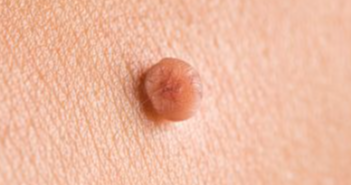 |
| Legs and inner thighs | Rubbing from walking, clothing and skin folds can cause irritation | Reduce friction and seek advice if it bleeds, hurts or changes | 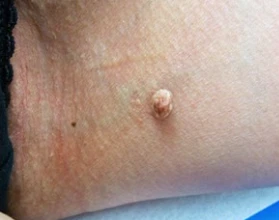 |
| Neck | Very common; collars, necklaces and shaving can catch or irritate tags | Protect from repeated trauma; consider professional advice if it regularly bleeds | 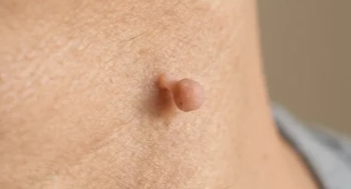 |
| Eyelids | The area is thin, sensitive and close to the eye | Do not cut, tie off or apply removal products near the eye | 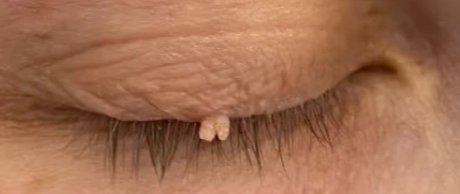 |
| Armpits | Sweat, shaving and friction can repeatedly irritate a tag | Avoid treatment on freshly shaved, broken or inflamed skin | 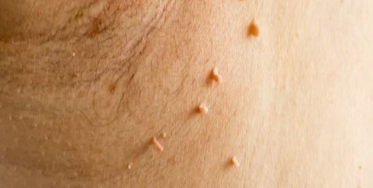 |
| Groin | Skin folds make skin tags possible, but other conditions can look similar | Do not self-diagnose; consider GP, dermatology or sexual-health advice if unsure | 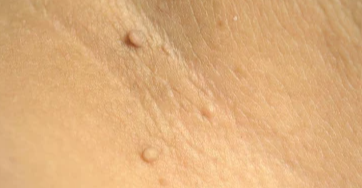 |
A useful rule is simple: the more sensitive the body area, the less appropriate home treatment becomes. This is especially true for a skin tag on eyelid, a growth in the genital area, or any lesion that is bleeding, sore, changing or difficult to identify.
3. Can Skin Tags Grow on the Hand and Fingers?
Skin tags on the hand and fingers can occur, but they are less typical than neck or underarm skin tags and are easier to mistake for warts or other lesions. For that reason, identification should come before any attempt at removal.
People may search for skin tags on hand or skin tags on finger when they notice a small bump that catches during washing, typing, gripping tools or wearing rings. Yet hands are also common sites for ordinary viral warts, calluses and lesions caused by repeated pressure or friction. These can look different from a classic soft, hanging skin tag.
Consider professional advice rather than relying on an online image if the bump is:
- Rough, grainy or firm rather than soft
- Flat or broad-based rather than hanging from a narrow stalk
- Painful when squeezed or pressed
- Around the nail, on a knuckle or in a high-pressure area
- Growing quickly, bleeding or changing colour
- Present in a child, where warts are particularly common
Avoid picking, cutting or repeatedly filing a hand growth. Daily use of the hands creates repeated contamination and trauma risk, especially if the skin breaks. If it is a confirmed skin tag, a clinician can discuss whether treatment is necessary; if it is a wart or another lesion, the appropriate approach may be different.
For site visitors, this is a useful internal-link point: “Not sure whether it is a skin tag or a wart? Read our guide to skin tag vs wart differences before considering treatment.”
4. Why Do Skin Tags Develop on the Leg or Inner Thigh?
Skin tags on the leg are most plausible around the inner thigh or other areas exposed to rubbing, rather than on every part of the leg. Walking, exercise, tight clothing and skin-to-skin contact can make an existing tag sore or more noticeable.
A small, soft tag on the inner thigh may catch on seams, underwear or sportswear. This can lead to redness, tenderness or minor bleeding after friction. It does not necessarily mean the growth is dangerous, but repeated trauma is a reason to pause any home approach and seek advice.
Practical ways to reduce irritation include:
- Choose breathable clothing that does not repeatedly rub the area
- Avoid shaving directly over a raised growth
- Keep the area clean and dry after exercise
- Do not pull, twist or tie off a lesion that has not been confidently identified
- Seek medical advice if it becomes painful, infected, ulcerated or repeatedly bleeds
A bump on the shin, knee, calf or ankle may still be a skin tag, but those sites are less associated with skin folds. It is therefore particularly important not to treat a diagnosis as certain based solely on appearance.
5. Why Are Skin Tags on the Neck So Common and Easily Irritated?
Skin tags on neck are among the most common and recognisable types, largely because the neck experiences frequent rubbing from skin folds, collars, jewellery and shaving. They are often harmless, but their visibility and tendency to catch can make them frustrating.
A neck skin tag may become irritated when it rubs against a shirt collar, necklace, scarf, razor or hair. Repeated rubbing can cause it to look redder or feel tender. A tag that has been caught may bleed slightly, but unexplained or persistent bleeding still needs assessment.
If you have multiple skin tags on neck, do not assume this automatically signals a serious problem. Multiple tags can be common. However, it is sensible to speak to a GP if many appear suddenly, if they are changing quickly, or if you have other health concerns you want to discuss.
For everyday care:
- Avoid tight collars or jewellery that repeatedly catches the tag
- Use care when shaving around raised lesions
- Do not cut a tag off with scissors, nail clippers or blades
- Avoid using an unverified “mole remover” or strong chemical product
- Get advice if the lesion is very dark, firm, irregular, painful or repeatedly bleeds
The NHS notes that skin tags are usually harmless and that removal is not normally available on the NHS for cosmetic reasons alone. Local NHS access policies can vary, especially where a lesion causes repeated bleeding, infection, pain, visual obstruction or functional problems.
6. Is It Safe to Remove a Skin Tag on the Eyelid?
A skin tag on eyelid may be harmless, but it should not be treated like a neck or body skin tag because the eyelid is delicate and sits directly beside the eye. Do not cut, freeze, tie off or apply acids, serums or home-removal products near the eye unless a qualified eye or medical professional has specifically advised it.
An eyelid growth may be a skin tag, but it could also be another benign lesion or a condition that needs different care. The practical issue is not merely whether it looks small. It is that an error in identification or application can cause injury to the eyelid or eye itself.
Seek professional assessment promptly if an eyelid lesion:
- Affects vision, blinking or the position of the eyelashes
- Causes persistent irritation, pain, swelling or discharge
- Bleeds, crusts, ulcerates or changes quickly
- Is dark, irregular or firm
- Appears to grow from the lid margin rather than the surrounding skin
An optometrist can be an appropriate first point of contact for some eye concerns in the UK, while a GP can assess and direct referral where needed. The right pathway depends on the symptom and local service availability.
This is an important trust point for a DTC brand: do not imply that at-home skin tag products are appropriate for eyelids or the immediate eye area. Clear exclusions are safer for customers and more credible for search engines and AI-generated summaries.
7. Why Do Skin Tags Form Under the Armpits?
Skin tags under armpit are common because the area combines skin folds, movement, sweat, clothing friction and hair removal. The main issue is often irritation rather than danger, but this is also a place where shaving or chemical products can worsen broken skin.
A tag in the armpit can catch on a razor, bra edge, fitted shirt or sportswear. Sweat and deodorant may sting if the tag has already been scratched or nicked. If a raised growth becomes painful, very red, swollen or produces discharge, do not continue trying to remove it at home.
Safer everyday steps include:
- Avoid shaving directly over the lesion
- Do not apply strong products to freshly shaved or irritated skin
- Use loose, breathable clothing where possible
- Keep the area clean and dry
- Stop using a product immediately if there is burning, severe stinging, swelling or skin breakdown
A common question is whether shaving causes skin tags. Shaving may irritate an existing tag, but it does not prove that shaving caused the growth. Friction and skin folds may contribute to why tags are common in this region, but a new armpit bump should not automatically be assumed to be one.
8. Are Skin Tags in the Groin Area Normal?
Skin tags in groin area can occur in skin folds, including the inner thigh and around the groin, but this is not a location for casual self-diagnosis or DIY removal. Other conditions, including warts and other genital or skin lesions, can have a similar appearance.
This should be approached without embarrassment or stigma. A growth in the groin does not by itself indicate a sexually transmitted infection, and it does not by itself prove that it is a skin tag. The safe response is to assess the pattern and seek professional advice if you cannot confidently identify it.
Arrange assessment through a GP, sexual-health clinic or dermatology service if the lesion:
- Is new and you are unsure what it is
- Appears in clusters or has a rough, cauliflower-like surface
- Itches intensely, hurts, bleeds or ulcerates
- Changes in colour, shape or size
- Is on genital tissue, near a mucous membrane or close to the anus
- Causes distress or affects daily comfort
Do not use scissors, thread ligation, freezing kits or strong chemical solutions on suspected genital-area lesions without professional guidance. The risk is not only irritation; it is also delaying the correct diagnosis.
For readers seeking how to remove skin tags, the key message is that location comes first. What may be considered for a confirmed tag on an accessible body site should not be automatically transferred to the groin, eyelid or any lesion with uncertain identity.
9. When Should You Seek Medical Advice for a Suspected Skin Tag?
You should seek medical advice when a growth is changing, painful, bleeding without a clear cause, infected, or not confidently identifiable as a skin tag. Most skin tags are harmless, but this safety check prevents people from treating the wrong condition or overlooking a lesion that needs assessment.
Contact a GP, pharmacist, dermatologist, optometrist or sexual-health service, depending on the site and symptoms, if you notice:
- Rapid growth or many new growths appearing suddenly
- Persistent pain, tenderness or itching
- Bleeding that is recurrent, heavy or not clearly caused by rubbing
- A hard, fixed, irregular, very dark or unevenly coloured lesion
- Crusting, ulceration, discharge, heat or swelling
- A growth on the eyelid that affects vision or eye comfort
- A growth in the groin that could be a wart or another genital lesion
- Uncertainty about whether it is a skin tag, wart, mole or something else
Medical advice is not an overreaction. It is the sensible route when location, symptoms or uncertainty makes home management unsuitable.
10. What Are the Safest Skin Tag Removal Options in the UK?
The safest option depends first on confirming that the growth is genuinely a skin tag, then on its location, size and symptoms. Many skin tags do not need treatment. However, if a confirmed tag repeatedly catches, bleeds after friction, becomes uncomfortable or affects confidence, removal may be considered with an appropriately qualified healthcare professional.
For high-risk or uncertain situations—especially a skin tag on eyelid, a growth in the genital area, a changing lesion, or anything that is painful or bleeding without an obvious cause—seek medical assessment rather than attempting removal at home.
Professional removal options
Professional removal is generally the most appropriate route for uncertain, sensitive-area or symptomatic skin tags. Depending on the lesion and clinical assessment, a GP, dermatologist or qualified practitioner may use:
- Cryotherapy, which uses controlled freezing to destroy the tissue.
- Cautery or electrosurgery, which uses controlled heat and can help manage bleeding.
- Snip or surgical excision, which may be used for selected, clearly identified skin tags.
- Histology or onward referral, where the diagnosis is unclear or the lesion has concerning features.
The NHS states that skin tags may be removed by freezing, burning or cutting. However, removal for cosmetic reasons alone is not generally available through the NHS. Local eligibility may differ, particularly if a lesion repeatedly bleeds, becomes infected, causes pain, obstructs vision or affects function.
Can I use an acid-based at-home skin tag remover?
An acid-based at-home skin tag remover should only be considered for a confidently identified skin tag on an appropriate external body site, and only when the product label expressly permits that use. It is not a substitute for diagnosis, and it is not suitable for every skin tag or every body area.
Traditional home-removal formulas may rely on salicylic acid. Salicylic acid is widely associated with wart treatments, but it can be irritating and may damage surrounding healthy skin if it is misapplied, overused or used on delicate areas. A product designed for skin tags should never be positioned as suitable for every bump, mole, wart or skin lesion.
An alternative formulation approach is a dual-acid complex with soothing botanicals. For example, a carefully formulated combination of acids intended to act locally on the target area, paired with botanical ingredients selected to support skin comfort, may offer a more controlled and gentler user experience than a high-irritation, salicylic-acid-led approach.
However, “gentler” does not mean risk-free, universally safe or medically appropriate for all users. Any claim that a dual-acid complex is milder, better tolerated or more suitable for home use must be supported by the finished product’s safety assessment, stability testing, usage data and substantiation for the exact formula.
11. More FAQs
Q1: Can skin tags grow on fingers?
Yes, skin tags can grow on fingers, but this is less typical than the neck, underarms or groin. A finger bump may instead be a wart, callus or another lesion, especially if it is rough, firm or painful. Avoid treating it as a skin tag until a pharmacist, GP or dermatologist has helped identify it.
Q2: Why do I get skin tags on my neck and armpits?
Skin tags are common on the neck and armpits because these areas experience frequent friction, skin folding, sweat, clothing contact and shaving. Collars, jewellery, bra edges and razors can irritate existing tags. Friction is associated with these sites, but it does not explain every individual skin tag cause.
Q3: Is a skin tag on the eyelid dangerous?
A skin tag on the eyelid is often benign, but it should be assessed carefully because the eyelid is sensitive and other growths can look similar. Do not use home-removal methods or chemical products near the eye. Seek prompt advice if it affects vision, bleeds, hurts, changes or irritates the eye.
Q4: Are skin tags in the groin normal?
Skin tags in groin area can be normal in skin folds, particularly near the inner thigh, but a groin growth should not be self-diagnosed. Warts and other genital lesions can resemble skin tags. If it is new, clustered, rough, painful, itchy, bleeding or uncertain, speak to a GP or sexual-health clinician.
Q5: Can skin tags appear anywhere on the body?
Skin tags can appear on many parts of the body, but they are most common where skin rubs together. The neck, armpits, eyelids, groin and under-breast area are typical locations. A growth in an unusual site is not automatically worrying, but it should not automatically be labelled a skin tag either.
Q6: Can I remove a skin tag myself?
At-home removal may be suitable only for a clearly identified skin tag on a label-approved external body area. Never treat eyelids, groin/genital skin, broken skin, or a painful, bleeding or changing growth yourself. Avoid cutting, tying or unregulated chemicals, which can cause infection, bleeding and scarring. A purpose-made acid-based remover, including a dual-acid complex with soothing botanicals, may offer a gentler option than salicylic-acid-led formulas when used exactly as directed.
Q7: What is the best way to remove skin tags?
The best way to remove skin tags is usually to have a confirmed skin tag assessed and treated by an appropriately qualified clinician if removal is needed. The chosen method depends on size, location and skin sensitivity. A method suitable for the neck may be unsafe near the eye or in the genital area.
Q8:Will a skin tag grow back after removal?
A properly removed skin tag usually does not grow back in exactly the same spot, but new skin tags can develop elsewhere. This is because the factors associated with skin tags, such as friction and skin folds, may remain. Recurrent or changing growths should be reviewed rather than repeatedly treated at home.
[Authoritative Sources]
- NHS, Skin tags
- American Academy of Dermatology, Skin tags: Why they develop, and how to remove them
- American Academy of Dermatology, 5 reasons to see a dermatologist for mole, skin tag removal
- NHS Hertfordshire and West Essex, Surgical Removal of Benign Skin Lesions
- British Association of Dermatologists, Patient Information Leaflets and Guidelines