Standard, over-the-counter wart removers should never be used on sensitive areas such as the face, neck, genitals, perianal region, lips, or inside the nose and mouth. These products are also unsafe for use on skin folds, moles, birthmarks, or any skin that is irritated, infected, or broken. Their harsh ingredients can cause chemical burns, scarring, and severe irritation on delicate skin.
Warts can be a persistent and unwelcome nuisance, prompting many to reach for readily available treatments. Yet, not all skin is created equal, and what works for a stubborn wart on a finger can be disastrous on more delicate body parts. Understanding which areas are off-limits for standard wart removers is crucial for preventing injury and ensuring safe, effective treatment. This comprehensive resource details the high-risk zones and explains the science behind why caution is paramount.
Table of Contents
Why Are Some Body Parts More Sensitive to Wart Treatments?
The skin’s resilience varies dramatically across the body. The tough, thick skin on the soles of your feet (where plantar warts form) can withstand treatments that would severely damage the thin, delicate skin of your eyelids. Several factors contribute to this heightened sensitivity in certain areas.
First, *skin thickness* is a primary determinant. The epidermis on the face, neck, and in skin folds is significantly thinner than on the hands and feet. Harsh chemicals can penetrate this finer barrier more quickly and deeply, destroying not just the wart tissue but also the healthy surrounding skin. This leads to a higher risk of chemical burns and permanent scarring. Additionally, these sensitive regions often have a higher density of nerve endings, making any irritation or damage far more painful.
Another critical factor is the presence of *mucous membranes*. These are the specialized, moist linings found inside the nostrils, mouth, and genital areas. They lack the protective outer layer (stratum corneum) that normal skin has, making them extremely vulnerable to the corrosive agents in wart removers. Applying such products here can cause immediate, severe pain and significant tissue damage.
The Primary Culprits in Over-the-Counter Wart Removers
To appreciate the risks, it’s important to understand how these products work. Most at-home wart treatments rely on one of two aggressive methods: chemical destruction or freezing.
The Action of Salicylic Acid
The most common ingredient in over-the-counter wart removers is salicylic acid. It’s a *keratolytic agent*, which means it works by breaking down keratin, the protein that makes up the bulk of both the wart and the outer layer of your skin. The acid softens and dissolves the infected tissue, allowing you to gradually peel or file away the wart layer by layer.
While effective on thick skin, this indiscriminate destruction is precisely what makes it so dangerous for sensitive areas. The acid cannot differentiate between wart tissue and the delicate, healthy skin nearby. On the face or neck, this can easily lead to a painful chemical burn, hyperpigmentation (dark spots), or permanent scarring long after the wart is gone.
How At-Home Freezing Kits Work
At-home cryotherapy kits use substances like dimethyl ether and propane to rapidly freeze the wart. This process, known as cryonecrosis, destroys the wart tissue by forming ice crystals within the cells. While it mimics professional cryotherapy, at-home kits are far less precise.
The applicators are often larger than the wart itself, making it difficult to avoid freezing the surrounding healthy skin. On sensitive areas, this collateral damage can result in painful blisters, infection, and changes in skin color. The lack of control and precision makes these kits entirely unsuitable for use anywhere near the eyes or on the delicate tissues of the face and genitals.
High-Risk Zone 1: The Face and Neck
The face and neck are perhaps the most common areas where people are tempted to misuse wart removers, and also where the consequences are most visible. These areas are characterized by thin, sensitive skin that is highly reactive to harsh chemicals.
Proximity to Eyes, Nose, and Mouth
Any treatment applied to the face carries an inherent risk of accidental contact with the eyes, nostrils, or mouth. The chemicals in wart removers can cause severe corneal burns, leading to vision impairment, or intense irritation to the delicate mucous membranes inside the nose and mouth. The potential for a simple mistake to have such a devastating outcome makes at-home chemical treatments in this region an unacceptable risk.
The Risk of Scarring and Pigmentation Changes
Facial skin is not only thin but also highly visible. A chemical burn from salicylic acid or a blister from a freezing kit can easily lead to permanent scarring. Another common complication is *post-inflammatory hyperpigmentation* (dark spots) or *hypopigmentation* (light spots) at the treatment site. These pigment changes can be more noticeable and distressing than the original wart itself and are notoriously difficult to correct.
High-Risk Zone 2: Genital and Perianal Areas
It is critically important to never use standard wart removers on warts in the genital, groin, or perianal (around the anus) regions. Warts in these areas are typically a different type, caused by strains of the human papillomavirus (HPV) that are sexually transmitted. They require a specific medical diagnosis and treatment plan from a healthcare professional.
The skin and mucous membranes in the genital and perianal regions are exceptionally delicate and absorptive. Applying a keratolytic agent or freezing compound here will cause extreme pain, severe chemical burns, and widespread tissue damage. This can lead to open sores that are highly susceptible to secondary bacterial infections. Furthermore, misdiagnosing another condition (like a skin tag, mole, or even a form of skin cancer) as a wart and treating it aggressively can have serious health repercussions.
High-Risk Zone 3: Inside the Nostrils, Mouth, or on Lips
The logic here is similar to that for the genital area but with added risks. The surfaces inside your nose and mouth, as well as the vermilion border of your lips, are mucous membranes. They are not designed to withstand corrosive chemicals. Applying a standard wart remover in these locations will cause immediate and severe chemical burns, blistering, and intense pain. It can also interfere with breathing and eating, and the risk of accidentally ingesting the chemicals is high.
Warts in these locations are rare and demand immediate medical attention. A doctor can offer specialized treatments, such as electrosurgery or specific topical prescriptions, that are safe for these highly sensitive membranes.
High-Risk Zone 4: Skin Folds and Areas of Friction
Areas like the armpits, under the breasts, and the inner thighs present a unique challenge. The skin here is often thinner and more sensitive due to constant friction and moisture. This environment, known as an intertriginous area, can trap the active ingredients of a wart remover, intensifying their effect and increasing the likelihood of a chemical burn.
The constant movement and rubbing in these folds can also disrupt the healing process, leading to greater irritation and a higher chance of infection. The occlusive environment can cause the treatment to spread to healthy skin, widening the area of damage. For these reasons, standard wart removers should be avoided in skin folds.
What Are the Potential Consequences of Misapplication?
Using a standard wart remover on a sensitive body part is not a minor mistake; it can lead to significant and sometimes lasting damage. The primary risks involve creating a new, more serious problem in an attempt to solve a cosmetic one.
The most immediate consequence is a chemical burn. This occurs when the acid or freezing agent destroys healthy tissue, resulting in redness, severe pain, blistering, and peeling. These burns can be deep and may require medical treatment to heal properly. If not cared for, a burn can easily become infected, leading to a more serious systemic issue that may require antibiotics. The ultimate and most feared outcome is permanent scarring or discoloration, which can be far more cosmetically concerning than the wart was.
| Risk Factor |
Description of Consequence |
Affected Areas |
| Chemical Burns |
Destruction of healthy skin tissue, causing pain, redness, and blisters. |
Face, Neck, Genitals, Skin Folds |
| Permanent Scarring |
Formation of scar tissue after a chemical burn or deep blister heals improperly. |
Most common on the face and other visible areas. |
| Pigmentation Changes |
Development of dark spots (hyperpigmentation) or light spots (hypopigmentation) at the treatment site. |
Face, Neck, Arms |
| Severe Infection |
Open sores or burns become infected with bacteria, requiring medical intervention. |
Genitals, Skin Folds, any area where skin is broken. |
Safer Alternatives for Treating Warts on Delicate Skin
If you have a wart on a sensitive area, self-treatment with over-the-counter products is not the answer. The safest and most effective path involves professional medical advice.
When to Consult a Dermatologist
You should always consult a dermatologist or other healthcare provider if a wart appears on any of the high-risk zones mentioned. A professional can provide a definitive diagnosis—confirming it is, in fact, a wart and not a more serious skin lesion—and recommend a treatment that is appropriate for the specific location and skin type. This is the gold standard of care and the only way to ensure both safety and efficacy.
Professional Medical Procedures
A dermatologist has access to a variety of treatments that are far more precise and safer for delicate skin than at-home kits. These may include:
- Professional Cryotherapy: Using liquid nitrogen, a doctor can freeze the wart with much greater precision and intensity than at-home kits, minimizing damage to surrounding tissue.
- Electrosurgery and Curettage: Burning the wart off with an electrical current and then scraping it away.
- Laser Treatment: Using a targeted beam of light to destroy the wart and its blood supply.
- Prescription Topicals: Prescribing medications like imiquimod or podofilox that are specially formulated for use on sensitive areas like the genitals.
Is There a Gentler At-Home Approach?
While harsh chemical peels and freezing kits are off-limits for sensitive zones, the demand for safer at-home solutions has led to the development of new formulations. For those seeking a different approach for warts on less sensitive areas like hands and feet, or after getting clearance from a doctor, exploring gentler options can be beneficial. These products move away from aggressive tissue destruction and toward a more controlled application.
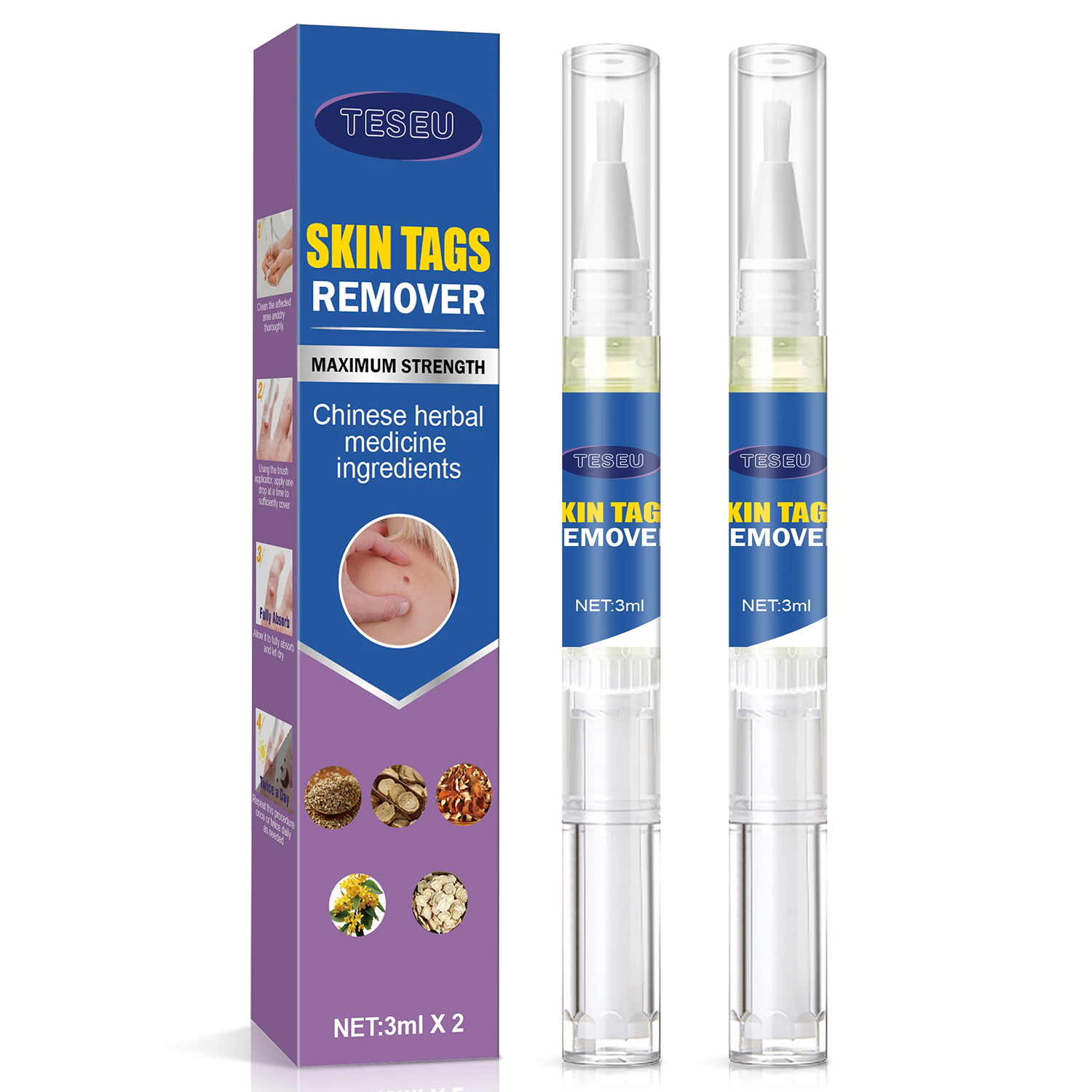
For instance, the Teseu Wart Remover Pen is engineered around this principle. It utilizes a plant-based formula designed to be gentle on the skin while effectively targeting the wart. This focus on a non-corrosive method aims to reduce the risk of collateral damage to healthy tissue, offering a more controlled treatment experience. Such innovations represent a shift toward prioritizing skin health during the wart removal process, even for common warts on non-sensitive body parts.
What To Do If You Have Already Used a Harsh Remover on a Sensitive Spot?
If you have already applied a standard wart remover to a sensitive area and are experiencing pain, redness, or blistering, take immediate action. First, wash the area thoroughly with mild soap and plenty of lukewarm water for 10-15 minutes to remove any residual chemicals. Do not scrub the area, as this can cause further damage.
After rinsing, gently pat the skin dry and apply a thin layer of plain petroleum jelly to create a protective barrier. Do not apply any other creams, ointments, or home remedies. It is highly advisable to contact a healthcare provider or visit an urgent care center promptly, especially if the burn is severe, blistering has occurred, or the affected area is near your eyes or on your genitals. A medical professional can assess the damage and provide proper wound care instructions to prevent infection and minimize scarring.
Frequently Asked Questions About Wart Removal Safety
Can I use a wart remover on a mole or birthmark?
Absolutely not. Moles and birthmarks are collections of pigment-producing cells. Applying a wart remover can damage these cells, cause significant irritation, or, most dangerously, alter their appearance, making it difficult to screen for skin cancer like melanoma later on. Any change in a mole should be evaluated by a doctor.
What about using these removers on children’s skin?
Children’s skin is inherently thinner and more sensitive than adult skin, making it more susceptible to burns and scarring. While some products are marketed for children, it is always safest to consult a pediatrician or dermatologist before attempting any at-home wart treatment on a child, regardless of the wart’s location.
How do I know if it’s a wart or something else?
This is a crucial question. Many skin lesions can mimic warts, including skin tags, seborrheic keratoses, and even some forms of skin cancer. A key sign of a common wart is the presence of tiny black dots (thrombosed capillaries). However, if you are ever unsure, or if the growth is painful, bleeds, or changes rapidly, a professional diagnosis is essential before attempting any treatment.