





Choosing a wart removal treatment depends on where the wart is, how long it has been present, your skin sensitivity and whether you can use treatment consistently. For many uncomplicated common warts and verrucas, an over-the-counter acid-based wart removal liquid is a practical first option; professional cryotherapy may be suitable in selected cases, but it is not automatically faster or more effective for every wart.
- Medical note: Warts and verrucas are caused by strains of human papillomavirus (HPV). They are usually harmless, and many resolve without treatment. This article is for informational purposes only and does not constitute medical advice. NHS guidance: https://www.nhs.uk/conditions/warts-and-verrucas/
Table of Contents
- What Are the Most Common Wart Removal Treatments?
- Wart Removal Liquid vs Freezing Treatment: Which Is Better?
- Salicylic Acid Wart Treatment: How Does It Work?
- Wart Removal Liquid vs Natural Remedies: What Should You Know?
- Which Wart Treatment Is Best for Different Types of Warts?
- How Long Does Each Wart Treatment Take to Work?
- When Should You Avoid Home Wart Removal?
- Choosing a Gentle but Effective Wart Treatment for Home Care
- More FAQs
 What Are the Most Common Wart Removal Treatments?
 What Are the Most Common Wart Removal Treatments?
The most widely used options in the UK are salicylic acid products and cryotherapy (freezing). A pharmacist can help you choose a suitable over-the-counter product, while a GP or dermatologist may assess warts that are painful, recurrent, unusual or located on sensitive areas.
|
Treatment |
How it works |
Typical use |
Important consideration |
|
Salicylic acid |
Gradually softens and removes thickened wart skin |
Daily home application |
Requires consistency for weeks |
|
At-home freezing |
Uses a cold agent to damage wart tissue |
Used as directed on the pack |
Usually less cold than clinical liquid nitrogen |
|
Professional cryotherapy |
Liquid nitrogen freezes the wart and surrounding tissue |
Performed in clinic, often in repeated sessions |
Can cause pain, blistering and skin irritation |
|
Watchful waiting |
Lets the immune system clear the wart naturally |
No active product |
May be reasonable for painless, typical warts |
|
Natural remedies |
Often include tea tree oil, vinegar or duct tape |
Varies widely |
Evidence and safety are less certain |
According to the NHS, many warts disappear naturally over time, but treatment may be considered when they are painful, spreading, or affecting daily activities.
Wart Removal Liquid vs Freezing Treatment: Which Is Better?
There is no universally “best” method. Wart removal liquid containing acid is usually more affordable, accessible and suitable for gradual home treatment of typical warts on hands or feet. It works by slowly breaking down the layers of hardened skin that make up the wart.
Freezing treatment may appeal to people looking for a less frequent application schedule. However, home freezing devices do not necessarily reproduce the effect of professional liquid nitrogen treatment, and clinical cryotherapy can still require repeated sessions. NHS Scotland guidance suggests reviewing treatment after around three months of daily acid-based solution and considering cryotherapy for non-responders, depending on the person and lesion.
|
If your priority is… |
A more suitable starting point may be… |
|
Gentle, low-cost home treatment |
Acid-based liquid, gel or plaster |
|
Treating thick skin on a verruca |
Acid, with careful product-directed preparation |
|
Fewer at-home treatment days |
An OTC freezing product, if suitable for the site |
|
Persistent, painful or uncertain lesion |
Clinical assessment |
|
A wart on the face or genitals |
GP or dermatology assessment, not DIY removal |
Neither route guarantees removal. The best approach is the one you can use correctly and consistently, while stopping if the skin becomes very sore or irritated.
Salicylic Acid Wart Treatment: How Does It Work?
Salicylic acid is one of the most widely used over-the-counter treatments for common and plantar warts. As a keratolytic ingredient, it gradually softens and sheds the thickened, dead skin layers that make up a wart. With careful, repeated use, the wart may become smaller and easier to remove over time.
Treatment usually requires patience and consistent application. The American Academy of Dermatology advises softening the wart first, gently removing only loose dead surface skin with a disposable tool, drying the area, and then applying salicylic acid exactly as directed. Avoid using the same emery board or pumice stone elsewhere on the body, as this can help spread the virus.
A sensible routine is:
- Confirm that the product is suitable for the body site and age group.
- Soak the wart in warm water for around five minutes, if the product instructions permit.
- Dry the area carefully.
- Apply the product only to the wart, avoiding surrounding healthy skin.
- Repeat at the frequency stated on the label.
Do not apply extra liquid to speed up results. Salicylic acid can take weeks of regular use, and overapplication may irritate or damage healthy skin without improving clearance. Local reactions may include dryness, stinging, redness, soreness, or irritation. Stop treatment and seek advice if significant pain, inflammation, blistering, broken skin, or signs of infection develop.
Salicylic acid wart removers should not be used on the face, around the eyes, on mucous membranes, on genital warts, or on lesions that may not be ordinary warts. People with diabetes, poor circulation, or reduced sensation should consult a healthcare professional before self-treatment.
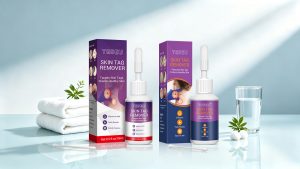
While salicylic acid remains the better-established OTC option, some wart removal liquids use a more modest alternative formulation approach: a dual-acid complex of benzoic acid and acetic acid, paired with skin-soothing herbal ingredients. This type of formula may be intended to combine targeted acidic action on the hardened wart surface with ingredients selected to support skin comfort. Yet, remember that all acid-based wart treatments still require precise, wart-only application and strict adherence to the product label.
Wart Removal Liquid vs Natural Remedies: What Should You Know?
Natural approaches are popular online, but “natural” does not always mean effective, gentle or safe. Home remedies such as apple cider vinegar, essential oils or aggressive scraping can cause chemical burns, pain and delayed diagnosis. They also have less reliable clinical evidence than standard salicylic acid-based treatments.
For a typical hand or foot wart, choose a product designed and labelled for wart removal rather than applying an unregulated household substance. If you prefer a minimal-intervention approach, watchful waiting can be reasonable for a painless lesion that clearly looks like a common wart or verruca; many warts eventually resolve on their own.
Which Wart Treatment Is Best for Different Types of Warts?
The location and appearance of the lesion matter more than choosing the strongest product available.
|
Type or situation |
Typical appearance |
Safer next step |
|
Common wart |
Rough, raised growth, often on fingers, hands, knees or elbows |
Consider a label-directed acid-based product if appropriate |
|
Verruca / plantar wart |
On the sole of the foot; may be flattened by pressure and painful when walking |
Acid-ased is commonly used; seek advice if painful or persistent |
|
Clustered verrucas |
Multiple connected lesions on the sole |
Pharmacist, GP or podiatry advice may be useful |
|
Facial wart |
Any wart-like growth on the face |
Do not self-treat with acid or freezing products; see a GP |
|
Genital wart |
Growth on genital or anal skin |
Seek sexual-health or GP assessment; do not use standard wart removers |
|
Skin Tag |
Soft, flesh-coloured growths usually found around the neck, underarms, eyelids, skin folds |
A wart remover should not automatically be used for skin tags unless it specifically states that it is suitable |
|
Uncertain growth |
Bleeding, changing, very dark, irregular or atypical lesion |
Arrange medical assessment before treatment |
A verruca is simply a wart on the sole of the foot. NHS Scotland describes plantar warts as potentially tender under pressure, while the British Association of Dermatologists notes that many can be left untreated if they are not troublesome.
How Long Does Each Wart Treatment Take to Work?
Wart treatment is usually a gradual process. The timeline varies with the size, depth and location of the wart, plus your consistency with treatment.
|
Treatment option |
What to expect |
|
Acid-based |
Often requires daily use over several weeks; some guidance advises reviewing after about 12 weeks |
|
At-home freezing |
May require repeat applications, following the exact interval on the packaging |
|
Professional cryotherapy |
May require several clinic treatments, commonly spaced weeks apart |
|
No treatment |
Can take months or longer, but spontaneous clearance is common |
NHS Scotland guidance recommends continuing self-treatment with daily acid-based products for at least three months before review in many cases. This does not mean everyone should keep treating an irritated or deteriorating lesion for three months: pain, infection, uncertainty or adverse effects are reasons to stop and obtain advice.
When Should You Avoid Home Wart Removal?
Avoid self-treatment, or speak to a pharmacist, GP or dermatologist first, if any of the following apply:
- You are not sure if the growth is a wart.
- The lesion is on your face, genitals or anal area.
- It is bleeding, changing colour, changing shape, very painful or rapidly growing.
- You have diabetes, poor circulation, reduced feeling in your feet or a weakened immune system.
- The surrounding skin is broken, infected, inflamed or ulcerated.
- The wart keeps returning despite treatment.
- The lesion makes walking, work or daily activities difficult.
The NHS specifically advises seeing a GP for a facial or genital wart, a lesion that bleeds or changes appearance, a very large or painful wart or verruca, or one that repeatedly returns.
Choosing a Gentle but Effective Wart Treatment for Home Care
For an uncomplicated wart on the hand or a verruca on the foot, an acid-based wart removal liquid can be a measured first-line home-care option when used exactly as labelled. Look for clear directions on application frequency, suitable body sites, age limits and warnings.
Choose a product that makes precise application easy. Liquids are often useful for small, defined warts, while plasters or pads may suit some foot lesions. The right format is the one that allows the active ingredient to stay on the wart rather than spreading across healthy skin.
A few practical habits improve safety:
- Wash hands after touching or treating a wart.
- Do not pick, bite or shave over a wart.
- Do not share towels, socks, footwear, pumice stones or nail files.
- Use a disposable file for the wart only, then discard it.
- Wear flip-flops in communal changing areas or swimming-pool environments.
- Follow the product’s instructions rather than combining products impulsively.
The American Academy of Dermatology advises: “If either tool touches another part of your body, you can spread the virus causing the wart.”
More FAQs
Q1: Can wart removal treatments work on verrucas?
Yes. A verruca treatment often uses the same broad approaches as treatment for other warts, especially salicylic acid and cryotherapy. Verrucas may take longer because they sit on weight-bearing skin and can be covered by thick callused skin. Use a product specifically indicated for plantar warts or verrucas, and seek advice if it is painful or not improving.
Q2: What is the fastest way to remove a wart?
There is no safe method that reliably removes every wart immediately. Professional cryotherapy can be faster for some people, but it may still need multiple appointments and can cause blistering. Daily acid is slower but is a commonly used home option. Avoid cutting, burning or applying harsh household chemicals to a wart.
Q3: Are wart removal liquids safe to use at home?
They can be safe for many people when used on a clearly identified, uncomplicated wart in an approved body area and strictly according to the pack instructions. Acid should touch the wart only, not normal skin. Do not use it on facial, genital, bleeding, infected or uncertain lesions.
Q4: Can I use wart removal liquid and freezing treatment together?
Do not automatically combine treatments. Some care pathways may use topical therapy alongside or after cryotherapy, but the correct timing depends on skin response and the individual product instructions. If freezing has caused a blister, raw skin or notable pain, wait for healing and ask a pharmacist, GP or dermatologist before applying an acid-based product.
Q5: How do I know whether it is a wart or a verruca?
A common wart is often raised and rough, frequently appearing on the fingers or hands. A verruca is a plantar wart on the foot sole; pressure can flatten it inward, and it may hurt on walking or when squeezed from the sides. If the lesion is dark, irregular, bleeding, changing or simply does not look typical, arrange medical assessment rather than self-treating.
Q6: What side effects are normal after wart treatment?
Mild dryness, whitening of treated skin, temporary stinging or local irritation can occur with acid. Freezing may cause short-term pain, redness, swelling, blistering or scabbing. Stop treatment and seek advice if pain is severe, irritation spreads, the skin becomes raw or there are signs of infection such as increasing redness, warmth, pus or fever.
Q7: When should I stop treatment and see a doctor?
Stop and obtain advice if the lesion bleeds, changes appearance, becomes very painful, becomes infected, recurs repeatedly or fails to improve after a reasonable label-directed treatment course. See a GP promptly for any wart-like lesion on the face or genitals, or if you are unsure of the diagnosis.
Q8: Can warts spread during treatment?
Yes. HPV can spread to nearby skin or to other people through direct contact and contaminated items. Avoid picking or shaving the wart, cover it where practical, wash hands after treatment and do not reuse files or pumice stones on other parts of the body.
Q9: Can warts come back after removal?
Yes. A wart can recur, and new warts can develop elsewhere. This does not necessarily mean that treatment was used incorrectly; wart clearance depends partly on the body’s immune response. If you have repeatedly recurring, multiple or rapidly spreading warts, ask a GP or dermatologist for assessment.
[Authoritative sources]
- NHS, “Warts and verrucas”
- NHS inform, “Warts and verrucas”
- NHS Scotland Right Decisions, “Viral warts”
- American Academy of Dermatology, “Warts: Dermatologists’ tips for at-home treatment”
- British Association of Dermatologists, “Plantar warts”
- Primary Care Dermatology Society, “Warts”
- DermNet, “Viral wart”